By Analyst Team · Updated 2026-07-18 · 12 min read
If you’re tired of cable bills that climb higher every year and still miss your favorite live sports, international channels, or on-demand movies, you’ve likely searched for an IPTV box. This guide answers exactly what an IPTV box is, how it works, whether it beats alternatives like Firestick, and — most importantly — how to get started today without overpaying or getting locked into a contract.
What Is an IPTV Box Exactly?
An IPTV box (Internet Protocol Television box) is a small electronic device that connects your television to the internet and decodes streaming video signals so you can watch live TV channels, movies, sports, and series — all without a traditional cable or satellite subscription. Unlike cable that sends signals through coaxial lines, an IPTV box receives content over your home Wi-Fi or ethernet connection, similar to how you stream Netflix on a smart TV.
Think of it as a bridge: your internet service brings the data to your home, and the IPTV box translates that data into watchable television on any HDMI-equipped TV, even older models without built-in smart features. The box itself runs on an Android-based operating system or proprietary Linux firmware, giving you access to an electronic program guide (EPG), recording capabilities, and multi-device support.
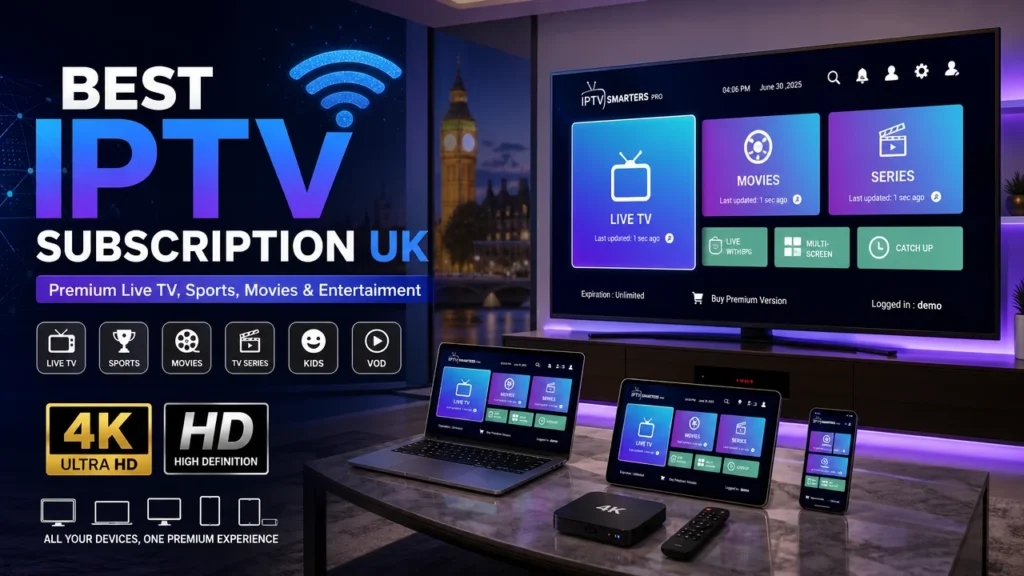
Key components of every IPTV box include an HDMI output, a power adapter, a remote control (often with voice control), and either Wi-Fi or ethernet connectivity. Higher-end models offer 4K upscaling, HDR support, and Bluetooth for peripherals. The device itself is usually sold separately from the subscription service, meaning you buy the box once and then choose a monthly or yearly IPTV plan that fits your channel preferences.
How an IPTV Box Works Step by Step
Understanding the technology behind an IPTV box helps you troubleshoot issues and pick the right setup. Here’s the exact process when you press play on your remote:
1. You select a channel or on-demand title — The IPTV app installed on your box sends a request to the provider’s server over the internet.
2. Server streams video packets — The provider’s server locates the content and begins sending small data packets in real time using protocols like HTTP Live Streaming (HLS) or Real-Time Messaging Protocol (RTMP).
3. Box decodes the stream — Your IPTV box’s processor and built-in video decoder convert those data packets into uncompressed video frames that your TV can display.
4. Picture appears on screen — The HDMI cable carries the decoded signal to your television. With a solid internet connection (25 Mbps or higher for 4K), you see the channel in under three seconds.
This entire process repeats seamlessly as you change channels. Unlike traditional broadcast television, IPTV uses your internet bandwidth, so a faster connection means higher resolution and fewer buffering interruptions.
Concrete Benefits for Real Users
Switching to an IPTV box offers advantages that cable simply cannot match. Here are the most impactful benefits reported by thousands of users:
- Massive cost savings — Most IPTV subscriptions range from $10 to $25 per month, compared to $80-$200 for cable. Over a year, that’s a saving of $660 to $2,100.
- No contracts — The majority of IPTV providers offer month-to-month plans with zero cancellation fees. You can pause and resume whenever you want.
- Thousands of channels — A single subscription often includes 5,000+ live channels from dozens of countries, plus tens of thousands of movies and series on demand.
- Live sports access — If you’re looking for the best IPTV box for live sports, most premium providers include every major league (NFL, NBA, Premier League, UFC, F1) without blackout restrictions.
- Multi-device support — Many plans let you watch on two, three, or even five devices simultaneously, making an IPTV box for multiple TVs a single-subscription solution.
LIMITED TIME AVAILABILITY
Unlock Full iptv box Access
Unlock complete high-definition information and priority access packs. Lock in your pricing model today before plans return to standard regional metrics.
Honest Limitations You Should Know
No technology is perfect, and an IPTV box has drawbacks that matter depending on your expectations. Here’s what frustrates some users:
✔ Pros
- ✅ 80-90% cheaper than cable
- ✅ No annual contracts or cancellation fees
- ✅ Contains international channels
- ✅ Works on any TV with HDMI
- ✅ 4K and HDR support on premium boxes
✖ Cons
- ❌ Requires stable internet (25+ Mbps)
- ❌ Buffering during peak hours occasionally
- ❌ Provider reliability varies widely
- ❌ Setup requires some technical steps
- ❌ Not all boxes support Dolby Audio
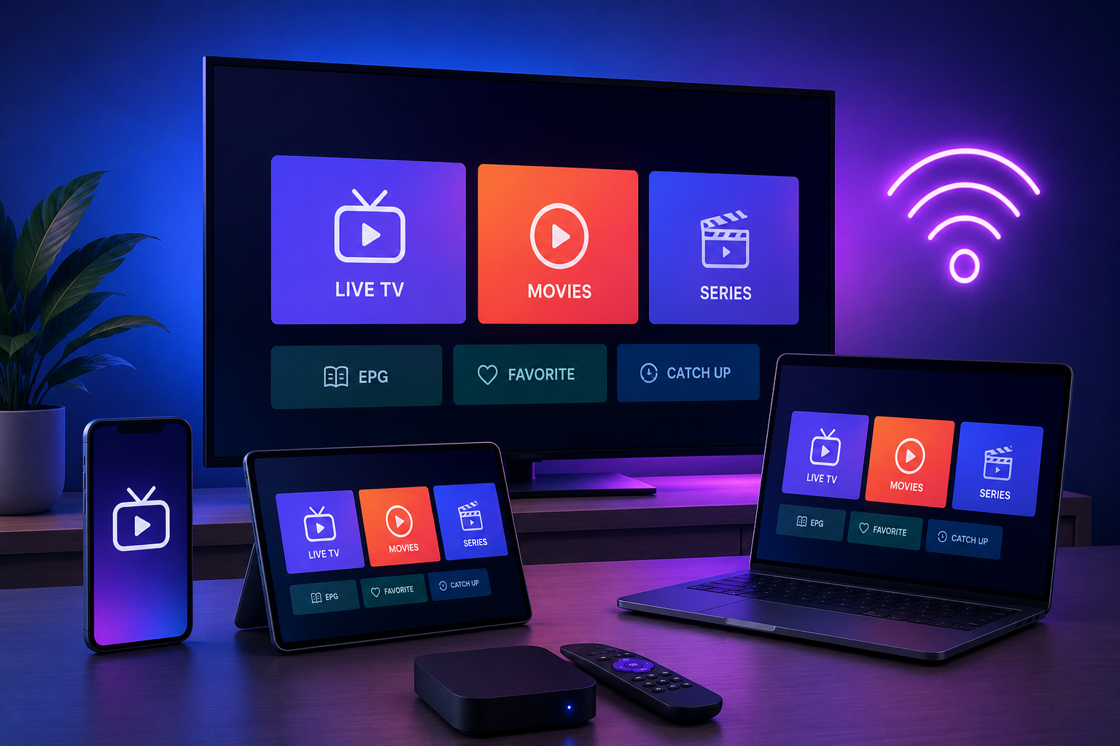
The most common complaint among new users is initial buffering. This usually happens because your internet speed is too low or because the provider’s server is overloaded. A wired ethernet connection and a reputable provider solve 90% of these issues. For a cheap IPTV box with Wi-Fi, expect occasional slowdowns during evening hours if your router is far from the living room.
IPTV Box vs. Firestick vs. Smart TV: Which Should You Choose?
Many readers ask whether an IPTV box is better than an Amazon Fire TV Stick or a built-in smart TV platform. Here’s a direct comparison table to help you decide:
The main takeaway: if your priority is live sports and channel surfing with a traditional TV experience, a dedicated IPTV box wins hands down. The Firestick is better for casual streaming and app-based content, while smart TVs work fine if you only watch mainstream services like Netflix or Hulu.
Who Is an IPTV Box For?
An IPTV box suits specific user profiles better than others. Here are the three most common types of people who benefit the most:
The cord-cutter on a budget — You’re paying $120+ per month for cable but only watch 20 channels. Switching to an IPTV box saves you $800+ per year without losing access to live news, sports, or entertainment.
The international viewer — You want channels from your home country (Indian, Arabic, Filipino, Latin American, etc.) alongside local networks. IPTV boxes offer thousands of international channels that cable simply doesn’t carry.
The live sports fanatic — You need every NFL Sunday game, every Premier League match, every UFC pay-per-view. A single IPTV subscription costs a fraction of what sports cable packages charge, and you get them without blackout restrictions.
How to Get Started: Practical Numbered Steps
Setting up your first IPTV box takes about 15 minutes. Follow these exact steps to avoid common mistakes:
- Check your internet speed — Run a speed test at fast.com. You need at least 25 Mbps for 1080p and 50 Mbps for 4K streaming. If your speed is lower, upgrade your plan or use an ethernet cable instead of Wi-Fi.
- Choose a reliable IPTV box — Look for models with at least 2GB RAM, 16GB storage, Android 10 or higher, and built-in Wi-Fi 5 or 6. Popular hardware includes the Formuler Z series, BuzzTV, and MAG boxes. Avoid no-name Chinese boxes with 1GB RAM.
- Purchase a subscription plan — This is the most critical step. Make sure you find an IPTV box subscription no contract provider. Many offer 24-hour trials for $2-$3 so you can test channel variety and stability before committing.
- Connect the box to your TV — Plug the HDMI cable into any available port. Connect the power adapter. Turn on the TV and select the correct HDMI input using your TV remote.
- Connect to the internet — Using the included remote, navigate to Wi-Fi settings and select your home network. If you use ethernet, the box will connect automatically once plugged in.
- Install the IPTV app — Your provider will send you an app name (often TiviMate, Smart IPTV, XCIPTV, or their own branded app). Download it from the Google Play Store on the box.
- Enter your login details — Open the app, enter the username, password, and server URL provided by your IPTV subscription service. The app will load your channel list within 10-30 seconds.
- Customize your experience — Add channels to favorites, configure the electronic program guide (EPG) for TV schedules, and adjust video output settings to match your TV’s resolution (1080p or 4K).
Secure special promotional rates instantly before the window closes.
Activate Your iptv box Subscription Now →Frequently Asked Questions
What is the best IPTV box for live sports streaming?
The best IPTV box for live sports is the Formuler Z11 Pro or the BuzzTV XRS4900. Both models support 4K at 60fps, have built-in EPG with sports categories, and allow DVR recording so you never miss a game. They also feature low-latency decoding, which reduces the delay between live action and what you see on screen — crucial for sports betting or watching with friends on another device.
How do I set up an IPTV box for the first time?
To set up an IPTV box, connect the HDMI cable to your TV and power it on. Connect to your Wi-Fi network or plug in an ethernet cable. Then download your provider’s recommended IPTV app from the Google Play Store, enter the login credentials they gave you, and the channel list will populate automatically. Most boxes take less than 10 minutes from unboxing to watching your first channel.
Which is better: an IPTV box vs Firestick?
The IPTV box vs Firestick debate depends on your needs. An IPTV box offers dedicated hardware, a full remote with number pad, and better performance for live TV and sports streaming. A Firestick is more portable, cheaper, and integrates seamlessly with Amazon Prime, but often requires side-loading IPTV apps and has limited storage. For serious IPTV users, a dedicated box is always superior.
Where can I buy an IPTV box and subscription together?
You can buy an IPTV box from Amazon, eBay, or specialized electronics retailers like Formuler’s official store. However, the box and subscription are usually sold separately. Most providers recommend buying the hardware locally (for warranty support) and then purchasing a no contract IPTV box subscription online. Avoid bundles that claim to include a “lifetime” subscription — these are often scams or severely limited services.
Is there an IPTV box subscription with no contract?
Yes, reputable providers offer IPTV box subscription no contract plans. These are month-to-month services that you can cancel anytime with zero penalties. Prices range from $10 to $20 per month for a single connection. Some providers also offer 3-month, 6-month, and 12-month plans with discounts (usually 15-20% off the monthly rate) but with no lock-in — you simply prepay for convenience, not commitment.