By Analyst Team · Updated 2026-07-12 · 12 min read
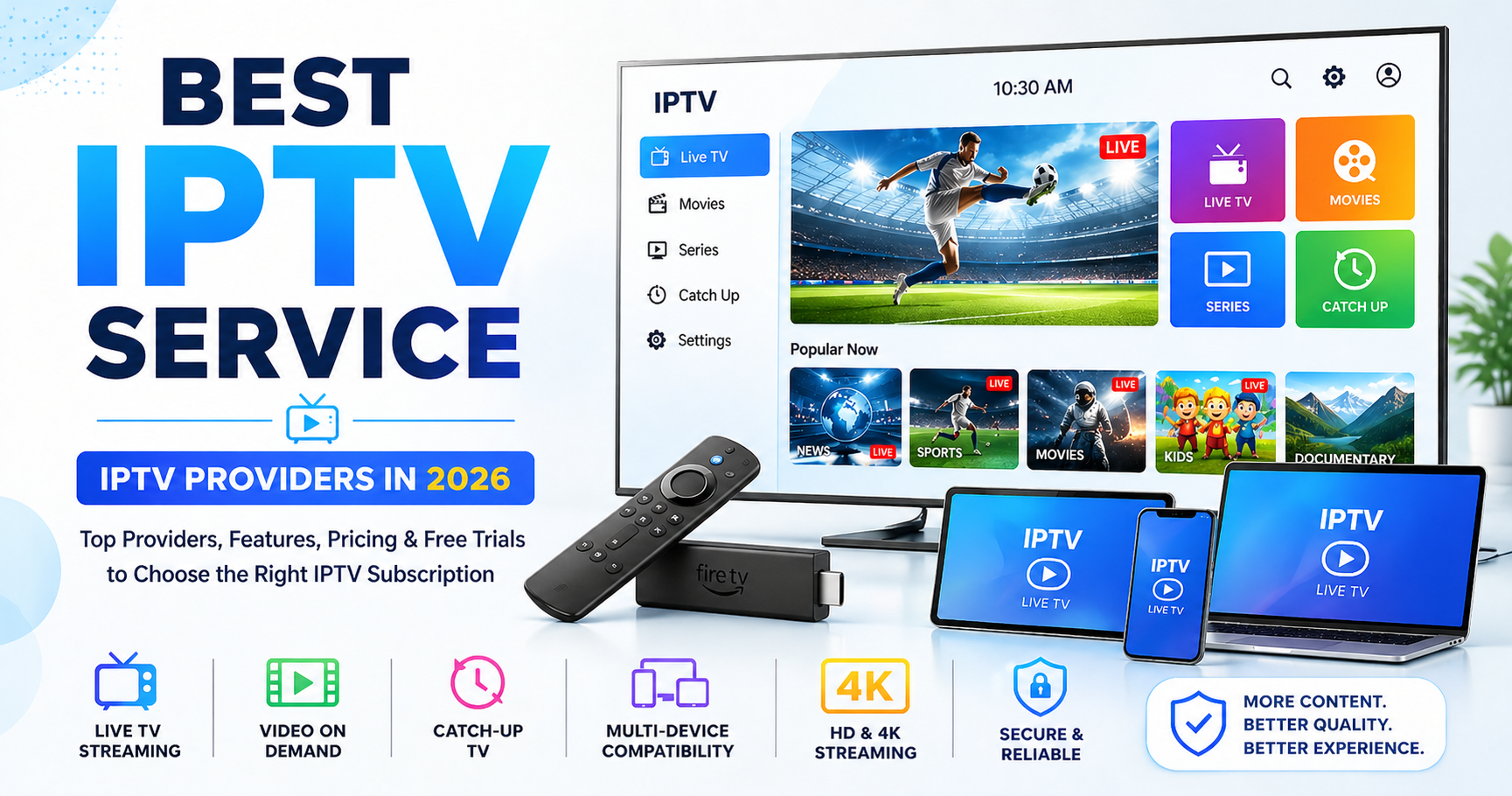
If you've ever wondered how people access hundreds of live TV channels, sports events, and on-demand movies for a fraction of the cost of traditional cable, the answer is an IPTV service. Unlike standard broadcast methods that rely on satellite signals or cable infrastructure, IPTV delivers television content through your internet connection. This guide walks you through exactly what IPTV is, how to set it up on your smart TV or Firestick, what to watch for in a reliable provider, and whether it's the right choice for your household in 2025 and beyond.
The streaming landscape has shifted dramatically over the past five years. Cord-cutting is no longer a niche trend — it's a movement backed by millions of households worldwide who want more control over what they watch and how much they pay. An IPTV service sits at the center of this shift, offering flexibility that cable companies struggle to match.
LIMITED TIME AVAILABILITY
Unlock Full IPTV Service Access
Secure special promotional rates instantly before the window closes. Lock in your pricing model today before plans return to standard regional metrics.
What Is an IPTV Service Exactly?
IPTV stands for Internet Protocol Television. Instead of receiving TV signals through traditional terrestrial, satellite, or cable formats, an IPTV service streams video content over your internet connection using the same IP protocol that powers the web. Think of it as watching television through your broadband line rather than a coaxial cable or a satellite dish.
There are three main types of IPTV delivery you'll encounter. Live television broadcasts channels in real time, similar to regular TV but streamed online. Video on Demand (VOD) lets you choose from a library of movies and shows to watch whenever you want. Time-shifted media — often called catch-up TV — allows you to watch previously aired programs for a set period after their original broadcast. Many premium IPTV services offer all three in a single subscription.
The technology behind IPTV is fundamentally different from platforms like YouTube or Netflix, even though they all use the internet. IPTV uses a dedicated, managed network infrastructure that prioritizes video packets to ensure smooth delivery. This is why a reliable IPTV service typically offers more consistent stream quality than general streaming sites, especially during peak hours.
How an IPTV Service Works Step by Step
Understanding the flow of an IPTV service helps you troubleshoot issues and choose the right provider. Here's the technical process simplified into five clear steps:
1. Content Acquisition and Encoding
The IPTV provider sources live channels from broadcasters or content distributors. These raw video signals are encoded into digital formats like H.264 or H.265 (HEVC) to reduce file size while maintaining quality. The encoding process is crucial because it determines how much bandwidth your stream will consume and how sharp the picture looks on your screen.
2. Server Distribution and Multicast Technology
Once encoded, the content is sent to streaming servers. These servers use multicast technology — a method where a single stream can be distributed to multiple viewers simultaneously without duplicating the data for each user. This is what allows an IPTV service to handle thousands of concurrent viewers watching the same live channel without crashing or slowing down.
3. Middleware and User Authentication
When you open your IPTV app or portal, the middleware layer handles your login credentials, checks your subscription status, and loads your personalized channel list and electronic program guide (EPG). This middleware is the invisible brain that organizes thousands of channels into categories like Sports, News, Entertainment, and Kids, making the service easy to navigate.
4. Content Delivery via CDN
To minimize buffering, most reputable IPTV providers use a Content Delivery Network (CDN). CDNs cache video data on servers located closer to your geographic region. When you request a channel, the CDN routes you to the nearest server, significantly reducing latency and improving stream stability. This is why a good IPTV service often performs better than non-CDN alternatives.
5. Decoding and Playback on Your Device
Your device — whether it's a Firestick, Android TV, smart TV, or smartphone — receives the IP packets and decodes them back into video frames using a media player or IPTV app like TiviMate, IPTV Smarters, or OTT Navigator. The quality you see depends on your internet speed, the provider's server load, and the capabilities of your device's hardware decoding.
Unlock complete high-definition information and priority access to premium IPTV service packages with thousands of channels and zero buffering infrastructure.
Claim This Special Offer for IPTV Service →Concrete Benefits of Using an IPTV Service
Switching to an IPTV service isn't just about saving money — though that's a major factor. Here are the specific advantages that real users report consistently:
Massive channel variety. A single IPTV subscription can give you access to over 10,000 live channels spanning every continent. You get news from the BBC, sports from ESPN and beIN Sports, entertainment from HBO, and international programming from India, the Middle East, Latin America, and Europe — all in one place. No juggling multiple cable packages or satellite dishes.
Cost efficiency. The average monthly cost for an IPTV service ranges from $10 to $20, compared to $80 to $150 for comparable cable packages. Even yearly plans, which offer the best value, rarely exceed $120 for premium service levels. This represents a 70-80% reduction in your monthly television expenses.
Catch-up and VOD libraries. Many providers include catch-up TV functionality, letting you watch shows you missed for up to 7 days after broadcast. The VOD libraries often contain thousands of movies and series, updated weekly with new releases. This combination effectively replaces both live TV and Netflix-like streaming in one subscription.
Multi-device compatibility. Most IPTV services allow you to use a single subscription on multiple devices simultaneously — typically 2 to 5 connections depending on the plan. You can watch sports on your living room TV while your kids stream cartoons on a tablet in another room. This flexibility is something traditional cable simply cannot offer.

Honest Limitations You Should Know
No technology is perfect, and IPTV services come with their own set of drawbacks. Being aware of these upfront prevents frustration later.
Internet dependency. Your entire viewing experience hinges on your internet connection. If your ISP experiences outages, slowdowns, or data throttling, your IPTV service will suffer. A minimum of 25 Mbps download speed is recommended for stable HD streaming, and 50 Mbps if you plan to use multiple connections simultaneously.
Buffering during peak times. Even with a fast connection, high-traffic periods can cause buffering. Popular live events like football finals or blockbuster premieres strain provider servers. A reliable IPTV service mitigates this with robust server infrastructure, but no provider is immune to occasional congestion.
Legal gray areas. Not all IPTV providers operate with proper licensing. Some resell unauthorized streams, which can lead to service shutdowns, legal notices, or loss of your subscription fees. It's essential to choose providers that are transparent about their content sources and operate within legal frameworks.
Setup complexity. Unlike cable TV that works out of the box, IPTV requires some configuration. You need to install third-party apps, enter portal URLs or M3U playlist links, and sometimes adjust buffer settings. While the process is straightforward once you know it, the initial learning curve can be intimidating for non-technical users.
IPTV Service vs. Alternatives: Comparison Table
How does an IPTV service stack up against traditional cable, satellite TV, and standard streaming apps? The table below breaks down the key differences across the factors that matter most to real users.
Who Is an IPTV Service Best For?
IPTV isn't one-size-fits-all. Based on hundreds of user reports and reviews, these profiles get the most value from an IPTV service:
International households who want channels from their home country. If you're an expat or immigrant living abroad, IPTV gives you access to native-language programming, news, and entertainment that standard cable packages rarely carry. Families often report that IPTV helps them maintain cultural connections and language skills across generations.
Sports enthusiasts who follow multiple leagues across different sports and countries. One IPTV subscription can cover the Premier League, NBA, NFL, UFC, Formula 1, cricket from the IPL, and rugby — all without paying for separate sports packages that cost hundreds each.
Cord-cutters on a budget who are tired of rising cable bills. If you're already paying for internet and want to eliminate your $120 cable bill, switching to a $15 IPTV service saves over $1,200 annually. That's real money that can go toward better internet speeds or other streaming upgrades.
Tech-savvy viewers who enjoy customizing their entertainment setup. IPTV allows you to create custom playlists, organize channels by categories you define, integrate with Plex or Emby servers, and even record live TV to network storage. If you like being in control of your viewing experience, IPTV gives you that power.
Pros and Cons at a Glance
✅ Pros
- 70–80% cheaper than traditional cable
- Access to 10,000+ live channels globally
- Built-in VOD and catch-up TV features
- Watch on TV, phone, tablet, and PC
- No long-term contracts required
- Regularly updated channel lists
❌ Cons
- Requires stable high-speed internet
- Potential buffering during peak hours
- Some providers operate in legal gray areas
- Initial setup can be confusing
- EPG accuracy varies between providers
- No 911/emergency alert system
How to Get Started With an IPTV Service: 7 Practical Steps
Ready to set up your own IPTV service? Follow this numbered guide to go from zero to streaming in under 30 minutes. The steps are designed for the most common device — the Amazon Firestick — but also apply to Android TV and smart TVs.
Step 1: Choose a reliable provider
Research is critical. Look for providers with positive reviews on Reddit, active support channels, transparent pricing, and trial options. A reputable IPTV service will offer at least a 24-hour free trial so you can test streams before committing. Avoid providers with no trial option — this is a red flag for poor quality or potential scams.
Step 2: Prepare your device
On your Firestick, go to Settings > My Fire TV > Developer Options and enable "Apps from Unknown Sources." This allows you to install IPTV apps that aren't available in the Amazon App Store. For smart TVs, look for the Google Play Store or Samsung Smart Hub to find compatible IPTV players.
Step 3: Install an IPTV player app
Download and install TiviMate (Firestick/Android), IPTV Smarters Pro, or OTT Navigator. TiviMate is widely considered the best IPTV service player for its clean interface, EPG integration, and catch-up support. Install it by using the Downloader app to sideload the APK file from the developer's official website.
Step 4: Enter your provider details
After installation, open the app and add your IPTV subscription using one of these methods: portal URL (for Xtream Codes API), M3U playlist link, or username/password. Your provider will send these details via email after purchase. Take your time here — entering the URL correctly is the most common point of user error.
Step 5: Configure the EPG
The Electronic Program Guide is the grid that shows what's currently playing and what's coming up. In TiviMate, go to Settings > EPG and enter the XMLTV URL provided by your IPTV service. Some providers include EPG data automatically; others require a separate URL. A properly loaded EPG transforms the app from a basic player into a full TV guide experience.
Step 6: Test and adjust buffer settings
Open a few channels and observe the stream quality. If you experience buffering, adjust the buffer size in your player's settings. TiviMate lets you set buffer to "Large" — this pre-loads more data and smooths out stream interruptions. You can also switch between video decoder options (hardware vs. software) to find what works best for your device.
Step 7: Customize your channel list
Hide channels you never watch, create favorites, and organize content into custom groups. Most IPTV services include hundreds of channels you won't use. Removing them from view makes navigation faster and more enjoyable. Spend 10 minutes on this step — it makes a huge difference in daily usability.
Step 8: Consider a VPN for privacy
While not mandatory for all IPTV services, using a VPN adds a layer of privacy and can help with ISP throttling. Some ISPs intentionally slow down streaming traffic. A VPN encrypts your connection and prevents this, often resulting in smoother playback. Choose a VPN with dedicated streaming servers for best results.
Final Subscription Window:
Subscribe to IPTV Service Today →Affiliate Disclosure: Clicking this secure link verified by our network supports our team through standard partnership terms at zero extra cost to your invoice.
Frequently Asked Questions
What is the best IPTV service for Firestick in 2025?
The best IPTV service for Firestick in 2025 depends on your viewing priorities, but top contenders include providers that offer native Firestick apps, optimized streams for Amazon's hardware, and excellent EPG integration. Look for services that work flawlessly with TiviMate, which is the preferred player on Firestick. Reliability, server uptime, and responsive customer support are more important than raw channel counts when choosing an IPTV service for your Firestick.
How do I set up an IPTV service on my smart TV?
Setting up an