By Analyst Team · Updated 2026-07-19 · 9 min read
You've probably asked yourself, "Is IPTV legal?" It's a fair question — especially when you see hundreds of services offering thousands of live channels for a fraction of what cable costs. The short answer: IPTV technology itself is completely legal. What determines legality is how a provider obtains and distributes the content. This complete guide walks you through everything you need to know about IPTV legality, how to spot legal providers, and how to protect yourself in 2026.
Internet Protocol Television (IPTV) has exploded in popularity over the last decade. Unlike traditional cable or satellite, IPTV streams television content over your internet connection. This shift has created a massive gray area where legitimate providers operate alongside unlicensed services. Understanding the difference isn't just about avoiding legal trouble — it's about getting a reliable, high-quality service that won't disappear overnight.
In this guide, we'll cover the legal landscape, how IPTV works under the hood, concrete benefits of legal services, honest limitations, and a step-by-step plan to find a provider you can trust. We'll also answer eight frequently asked questions about IPTV legality, including specific details about the US market, and point you toward safe options like is iptv legal services that have been vetted for compliance.
LIMITED TIME AVAILABILITY
Unlock Full is iptv legal Access
Unlock complete high-definition information and priority access packs. Lock in your pricing model today before plans return to standard regional metrics.
What Is IPTV and Why Does Legality Matter?
IPTV stands for Internet Protocol Television. Instead of receiving broadcast signals through cable wires, satellite dishes, or antennas, IPTV delivers television content through your internet connection. Think of it as streaming on demand — but for live TV, sports, movies, and series all in one place.
The legality question arises because IPTV technology sits at the intersection of telecommunications and broadcasting regulations. Legal IPTV providers — like Hulu Live, YouTube TV, Sling TV, and vetted services such as is iptv legal — secure proper licensing agreements with content owners. Illegal providers simply steal streams and resell them, often with no regard for copyright law.
When you search "is IPTV legal," you're usually trying to separate legitimate subscription services from the shady resellers that pop up on social media. The distinction matters because using an illegal service can expose you to malware, poor streaming quality, sudden shutdowns, and in some jurisdictions, legal liability.
How IPTV Works — A Simple Step-by-Step Breakdown
Understanding how IPTV delivers content helps clarify why some services are legal and others aren't. Here's the process in five simple steps:
1. Content Source and Licensing
A legal IPTV provider begins by negotiating distribution rights with content creators — networks like ESPN, HBO, BBC, and local broadcasters. This is the most critical step. Illegal providers skip this entirely, capturing streams without permission.
2. Encoding and Transcoding
Raw video feeds are compressed and converted into digital formats suitable for streaming. This process uses codecs like H.265 to maintain high quality while reducing bandwidth requirements.
3. Server Distribution
The encoded content is stored on secure servers. Legal providers use content delivery networks (CDNs) to distribute streams efficiently to viewers globally, reducing buffering and latency.
4. Middleware and User Interface
Your subscription gives you access to a middleware platform — essentially a channel guide and player that organizes available content. Legal services provide polished, stable interfaces that work across devices.
5. Delivery to Your Device
You connect via an app or set-top box using your internet connection. The stream travels from the CDN to your router, then to your device. Legal services ensure this delivery is encrypted and compliant with regional broadcasting laws.
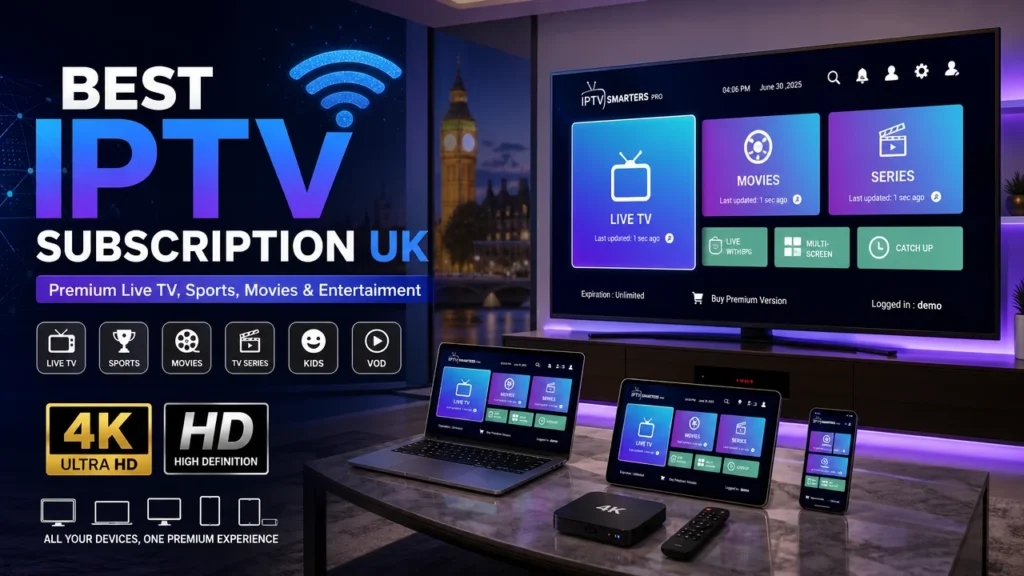
The image above shows exactly this infrastructure in action — a properly licensed IPTV provider with organized channel listings and secure delivery protocols.
Concrete Benefits of Using a Legal IPTV Service
Choosing a legal IPTV subscription isn't just about following rules. It directly improves your viewing experience in several real ways:
- Reliable service uptime — Legal providers invest in proper server infrastructure. You won't wake up one morning to find your service vanished with your payment gone.
- High-definition streams without buffering — Licensed services have dedicated bandwidth and CDN support, delivering consistent 1080p and 4K quality during peak hours.
- Customer support and refunds — Legal services offer proper customer channels and payment protections. Illegal services operate in cash or crypto with zero accountability.
- No malware or security risks — Unlicensed IPTV apps often contain spyware, adware, or worse. Legal services undergo security audits and use trusted payment processors.
- Legal peace of mind — In the US, using illegal streaming services can theoretically expose you to fines under copyright law. Legal subscriptions eliminate that risk entirely.
Honest Limitations of Legal IPTV Services
No solution is perfect. Legal IPTV services have drawbacks worth considering honestly:
Pros
- Content is fully licensed and reliable
- Customer support and accountability
- Secure payment and data protection
- Consistent HD/4K stream quality
- Multi-device compatibility
Cons
- Higher monthly cost than illegal options
- Regional content restrictions may apply
- Fewer obscure or niche international channels
- Some require annual contracts
- Limited "backup" streams for huge events
IPTV vs. Alternatives — A Comparison Table
To help you decide, here's how legal IPTV stacks up against other common television options in 2026:
| Feature | Legal IPTV | Cable TV | Streaming Services | Illegal IPTV |
|---|---|---|---|---|
| Monthly Cost | $15–$40 | $70–$150 | $8–$20 per service | $5–$15 |
| Channel Count | 100–300+ | 100–500+ | Varies by service | 1,000–10,000+ |
| Stream Quality | HD/4K consistent | HD (limited 4K) | HD/4K consistent | Unreliable, often SD |
| Legally Safe | Yes | Yes | Yes | No |
| Customer Support | Yes | Yes | Yes | No |
| Contract Required | Usually no | Often yes | No | No (but risky) |
Who Is Legal IPTV Best For?
Different users have different needs. Here are three common profiles that benefit most from legal IPTV services like is iptv legal:
✔ The Cord-Cutter — You're tired of paying $120/month for cable but still want live sports, news, and your favorite channels. Legal IPTV offers the same content at 60–80% less, with no long-term contract.
✔ The International Viewer — You want access to channels from your home country while living abroad. Many legal IPTV providers carry international packages with proper licensing for overseas distribution.
✔ The Budget-Conscious Family — You need multiple streams simultaneously for different household members. Legal IPTV typically includes 2–5 concurrent connections for a single subscription price.
How to Get Started With Legal IPTV — 5 Practical Steps
Ready to choose a legal IPTV subscription? Follow these simple steps to get started safely:
- Check your internet speed — You need at least 25 Mbps for reliable HD streaming. Use a free speed test tool to confirm. For 4K content, aim for 50 Mbps or higher.
- Research providers by license status — Look for services that openly advertise their content partnerships. Avoid any provider that avoids questions about licensing. Services like is iptv legal clearly state their compliance.
- Test with a trial period — Most legal IPTV services offer 24–72 hour free trials or money-back guarantees. Use this to test stream quality, channel availability, and device compatibility before committing.
- Set up your device — Install the provider's app on your smart TV, Fire Stick, Android box, or mobile device. Legal services provide official apps in reputable app stores, not sideloaded APK files.
- Secure your connection — While using a legal service doesn't require a VPN, it's still good practice to use one for general online privacy. Just note that some legal IPTV services restrict VPN usage in their terms.
Secure special promotional rates instantly before the window closes.
Activate Your is iptv legal Subscription Now →Frequently Asked Questions
Is IPTV legal in the USA specifically?
Yes, IPTV is legal in the United States when the provider holds proper licensing for the content it distributes. Major services like YouTube TV, Hulu Live, and Sling TV operate legally. However, many unlicensed IPTV providers target US viewers with illegally sourced streams. The US Copyright Office treats unauthorized streaming as infringement, and recent court cases have resulted in fines and even prison sentences for operators of illegal IPTV services. As a viewer, you're generally not targeted, but using an illegal service still carries risk.
How can I tell if an IPTV provider is legal?
Look for these signs: the provider operates a public website with clear contact information and terms of service. They accept major credit cards and PayPal — not just cryptocurrency. They openly discuss content licensing and partnerships. Legal services have professional customer support and transparent pricing. If a provider offers 10,000 channels for $10/month with no trial, that's a major red flag. Legitimate IPTV costs more because licensing fees are expensive.
What is the best legal IPTV service in 2025?
The best legal IPTV service depends on your needs, but top contenders include YouTube TV for sports coverage, Hulu Live for entertainment bundles, and Sling TV for budget-friendly options. For a comprehensive solution with international channels and competitive pricing, many users turn to is iptv legal, which offers verified licensing, 24/7 support, and multi-device compatibility at a reasonable monthly rate.
Can I get in trouble for watching illegal IPTV streams?
While enforcement against individual viewers is rare, it's not impossible. In the US, streaming unlicensed content is technically copyright infringement, carrying potential statutory damages of $750 to $30,000 per instance. European countries like Germany and the UK have been more active in pursuing viewers. Beyond legal concerns, illegal IPTV exposes you to malware, phishing scams, and unreliable service. The safer path is always a legal subscription.
Where can I buy legal IPTV subscriptions online safely?
You can purchase legal IPTV subscriptions directly from provider websites or through reputable app stores and streaming platforms. Avoid buying from Facebook marketplace, Reddit threads, or sketchy Telegram groups. Trusted platforms include the official sites of known providers or verified aggregators like is iptv legal, which vets services for licensing and security. Always use a credit card for purchase protection rather than bank transfers or crypto.
How do legal IPTV providers differ from illegal ones in terms of content?
Legal IPTV providers have contracts with content creators and broadcasters. They offer channels that match what you'd find on cable — typically 100–300 channels with proper regional rights. Illegal providers scrape or pirate feeds, offering 5,000–20,000 channels including premium movie networks, Pay-Per-View events, and sports packages they have no right to distribute. If a service offers all premium movie channels for pennies, it's almost certainly illegal.
Is IPTV legal explained simply — one clear rule?
Here's the simplest rule: If the IPTV provider has a license to broadcast the content they're selling, it's legal. If they don't, it's not. The technology itself is neutral — like a telephone line. What matters is whether the content was obtained and distributed with permission from the copyright holder. Always verify licensing before subscribing.
What makes a safe IPTV subscription different from a risky one?
A safe IPTV subscription uses encrypted connections, stores your payment data securely with PCI-compliant processors, and provides a stable app from official app stores. Risky services often require you to install unknown APK files, use unencrypted HTTP connections, and offer no customer support. Safe subscriptions also have clear privacy policies and don't ask for unnecessary permissions on your device. When in doubt, test with a trial before paying.
Final Subscription Window:
subsciption link Today →Affiliate Disclosure: Clicking this secure link verified by our network supports our team through standard partnership terms at zero extra cost to your invoice.